| |
| Monday, 16 November 2026 |
| Aphra Behn: Agent 160 and the First Woman of British Theatre |
| Giles Ramsay |
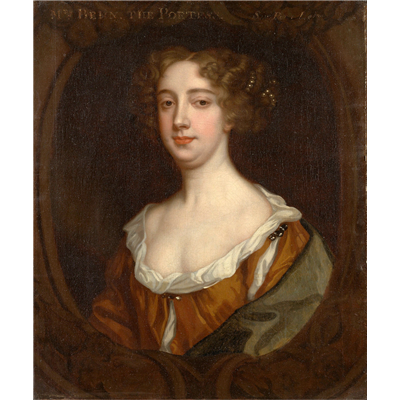 |
“All women together ought to let flowers fall on the tomb of Aphra Behn … for it was she who earned them the right to speak their minds.” Virginia Woolf Following a successful career as one of Charles II’s spies in Europe and South America Aphra Behn returned to England and shattered the glass ceiling of London’s Restoration Theatre by becoming one of the most successful playwrights of the age. Giles Ramsay is an independent theatre director and producer who creates new work with artists in developing countries. He is a course leader in Theatre at the Victoria and Albert Museum. Giles has run theatre projects all over the world. Giles combines academic analysis with hands on experience to bring a unique insight to the world of the theatre. Aphra Behn, Peter Lely, Yale Center for British Art
Public Domain, via Wikimedia Commons |
|
| Monday, 18 January 2027 |
| Dame Laura Knight (1877-1970): A Life in Paint |
| Alison Bevan |
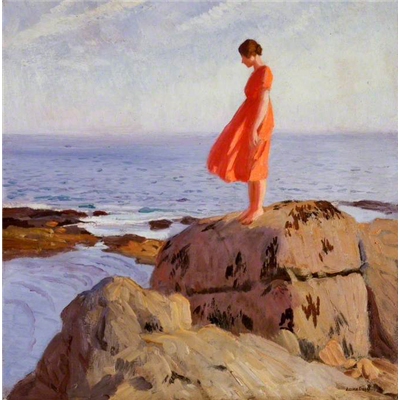 |
A true pioneer for her gender, Dame Laura Knight not only achieved a host of 'firsts' for a women artists, but became arguably Britain's most famous and best-loved artist of the mid-C20th. Focussing on her time in Cornwall, this talk also looks at her incredibly wide oeuvre, taking in ceramics and printmaking as well as painting. After graduating in History of Art from Nottingham University, Alison Bevan has spent her entire career working in public art galleries. Starting out at the Graham Sutherland Gallery in Pembrokeshire, she then spent ten years curating exhibitions at the Glynn Vivian Art Gallery in Swansea, where she honed her broadcast media skills. Dame Laura Knight, A Dark Pool © Laing Art Gallery, Newcastle Upon Tyne |
|
| Monday, 08 February 2027 |
| Salvador Dalí: 20th century renaissance artist |
| Julia Musgrave |
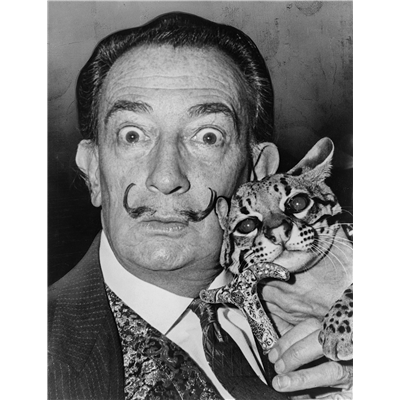 |
‘The secret of my influence has always been that it remained secret.’ Salvador Dalí Like the Renaissance artists he admired, Salvador Dalí did not restrict his creative output to painting but was also a writer, poet, engraver, sculptor, architect, photographer, theatre designer and jewellery designer. Jewels such as ‘El cor real’ (1953, The Royal Heart) have become iconic works and are considered to be as exceptional as his paintings. Dr. Julia Musgrave initial career was in IT but in 2008 she decided that life was too short for just one career and decided to become an art historian. She now has a Graduate Diploma in the History of Art from the Courtauld Institute of Art and an MLitt from the University of Glasgow. She teaches Art History at the City Literary Institute and the Highgate Literary and Scientific Institution. Salvador Dali by Roger Higgins, World Telegram staff photographer Public domain, via Wikimedia Commons |
|
| Monday, 15 March 2027 |
| From Bronzes to Banksy - an armchair tour of public art and street art |
| Ian Swankie |
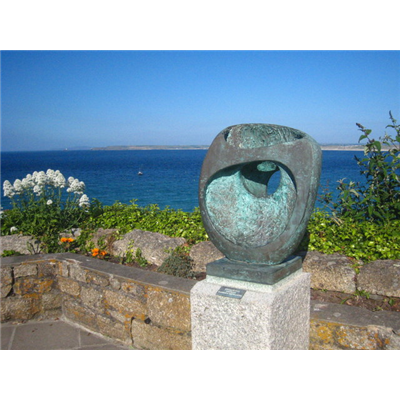 |
Please note this is a change to our original programme London has not only a world-class reputation for art in its many galleries, but also a remarkable range of art in the open air. We will tour around the capital discovering some of the most interesting works from across the centuries. They range from huge and expensive commissions to unofficial graffiti, which is sometimes audacious and often playful, but they all have a place in our society. We will look at why art is there, how it has developed over the years and we’ll discover many hidden gems. A Londoner with a passion for art and architecture, Ian is an official guide at Tate Modern, Tate Britain, Guildhall Art Gallery and St Paul’s Cathedral. He is also a qualified and active freelance London guide and is a Freeman of the Worshipful Company of Art Scholars. |
|
| Monday, 19 April 2027 |
| Edward Ardizzone: writing and drawing for children |
| Dr. Irving Finkel |
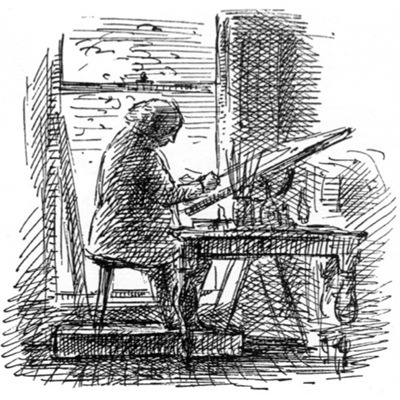 |
As a boy, the speaker once wrote to Edward Ardizzone and had the delight of receiving a letter with a drawing of the artist in reply. This led to a lifelong admiration and much consideration of why he is such a remarkable artist and how compelling and memorable his drawings are.. ...and he wrote stories! Dr. Irving Finkel is a British philologist and Assyriologist. He is currently Senior Assistant Keeper of Ancient Mesopotamian script, languages and cultures in the Department of the Middle East in the British Museum, where he specialises in cuneiform inscriptions on tablets of clay from ancient Mesopotamia. Irving is the author of academic articles and books on ancient Babylon. Self-portrait, Edward Ardizzone
from Dr. Irving Finkel's private collection |
|
| Monday, 17 May 2027 |
| Travels with a Trowel
|
| Louise Schofield |
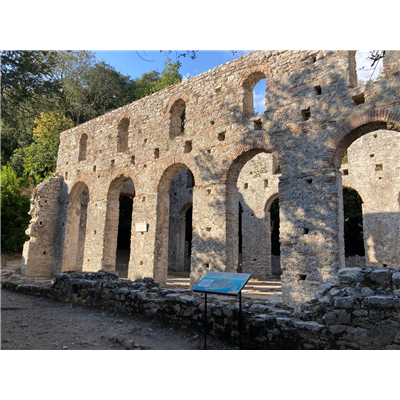 |
In 2000, after 13 years as a Curator in the Greek and Roman Department of the British Museum, Louise decided to escape. Given a trowel with a diamond and silver casing in the handle as a leaving present, she set off on a series of extraordinary archaeological adventures. In this richly illustrated talk she will take you to a mysterious ancient city on the coast of southern Albania, to the banks of the two great rivers of Mesopotamia and then to the wild and wonderful mountains of northern Ethiopia. Louise Schofield is an archaeologist who was Curator of Greek Bronze Age and Geometric Antiquities at the British Museum from 1987-2000. Her book, ‘The Mycenaeans’, was co-published by the Getty Museum and the British Museum in 2007. She now writes, lectures and runs international archaeological projects She was recently appointed Visiting Professor of Archaeology at the American University of Rome. The Great Basilica, Butrint
Image © Elaine Hayes |
|
| Monday, 21 June 2027 |
| The artistry of Peter Greenaway: still lives in motion |
| Benedict Morrison |
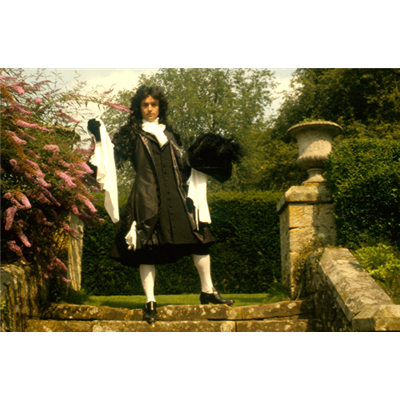 |
Since his breakthrough feature ‘The Draughtsman’s Contract’, he has used his experience as a painter to create some of the most startling compositions in cinema history. This talk considers how Greenaway’s reimaginings of masterpieces by Vermeer, Hals, and Breughel develop a philosophy of life, death, and decay. His uncanny use of the still life – or ‘nature morte’, as it is in French – introduces a stillness to the moving pictures of cinema that unnerves even as it dazzles. Benedict Morrison is a lecturer in Literature and Film at the University of Exeter. His publications include ‘Complicating Articulation in Art Cinema’ and ‘Eccentric Laughter: Queer Possibilities in Postwar British Film Comedy’ exploring post-war British comedy films. After seven years studying at the University of Oxford, he traded the dreaming spires for the cultural bustle of London. Still from The Draughtsman’s Contract
© BFI (British Film Institute) |
|
| Monday, 19 July 2027 |
| 17th century Dutch painting. 'Art in the Garden of God' (the art of Rembrandt, Frans Hals and Vermeer) |
| Douglas Skeggs |
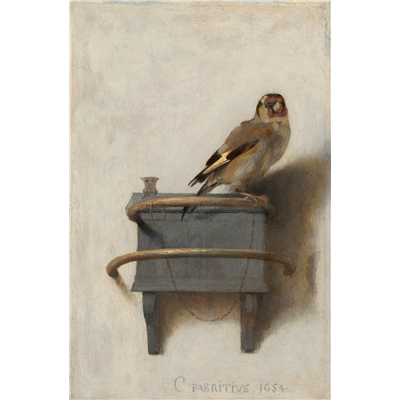 |
Dutch art was very different from other art of the 17th century, as it focused on the real lives of ordinary people. This lecture looks into why this is so. After independence, the Dutch made astonishing advances in science. This and the country’s merchant wealth, civic pride, and insistence on moral order and well scrubbed households are all reflected in the paintings of the time. This lecture shows how art is the mirror of its age, and how the age is preserved in its art. Douglas Skeggs read Fine Art at Magdalene College Cambridge. He lectures widely and has written and presented various TV documentaries. Three one-man exhibitions of his paintings have been held in England and Switzerland. He has published five novels. His book ‘Monet, River of Light’, has sold 30,000 copies. Carel Fabritius, The Goldfinch
Gallery Mauritshuis, The Hague
Public domain, via Wikimedia Commons |
|